I like to challenge myself by answering vague and difficult questions in a clear and coherent way. In many ways, this is what philosophers do: “Philosophy is the ungainly attempt to tackle questions that come naturally to children, using methods that come naturally to lawyers.” — David Hills
So, my childlike question today is “Why do I create things?” If the answer were simple, I would say that I create to feel emotions, to process the world, and to share things with others. But I am not satisfied with these answers; they feel too surface level. I have this strong, very human urge to make things — whether it be art, technical projects, games, a home, anything at all. Where does this come from? Is it unique to me? There are many questions.
I want to start by asking a simpler question: Is there a difference between the things I create for work (research, projects, shareholder value) and the things I create for myself? In one view, the things I create for work are intended to solve external problems. In my line of work, this typically means I am solving a biological problem with data, ML, and science — with the aim of making our lives easier, healthier, and happier. This seems very externally motivated, whereas the things I create for myself are not so much. The things I create for myself, whether art or not, don’t seem to have as much of a “purpose” at first glance. Despite this, I am driven to do them: photography, creative writing, cooking, games, a home. Why am I driven to do them if they have no purpose?
If you know much about me, you likely know I live a very existentialist life. The typical summary of existentialism is that “existence precedes essence,” but I vastly prefer the Camusian perspective that “authentic living is an act of rebellion against the indifferent universe” (quote is my own). Camus’ rebellious tendencies just have a sort of swagger to them that other existentialists lacked. Why would I simply live quietly when I could live outrageously with fire in my heart?
I digress. My point can be summed up like this: It may appear that I spend life creating for no reason at all — that the “true” life hides between the time I spend on the frivolous creation of things which do not matter. This is a deeply conventional view which I’m sure you’ve heard: that work, duty, and family make up the “real life,” while books or games or art belong to some frivolous fairyland outside of it. But it is in fact the opposite: the time I spend observing the world through photos, the human condition through stories, creating a home for me and my pets, or making spaces in games to have fun — these things are the life, while the gross mundanity that hides behind them is not life at all. I am fortunate enough that I truly enjoy the work I do — so, to me, all of these things feel like living.
The things you do in life do not need some external purpose or meaning behind them; you simply need to want to do them. That is enough.
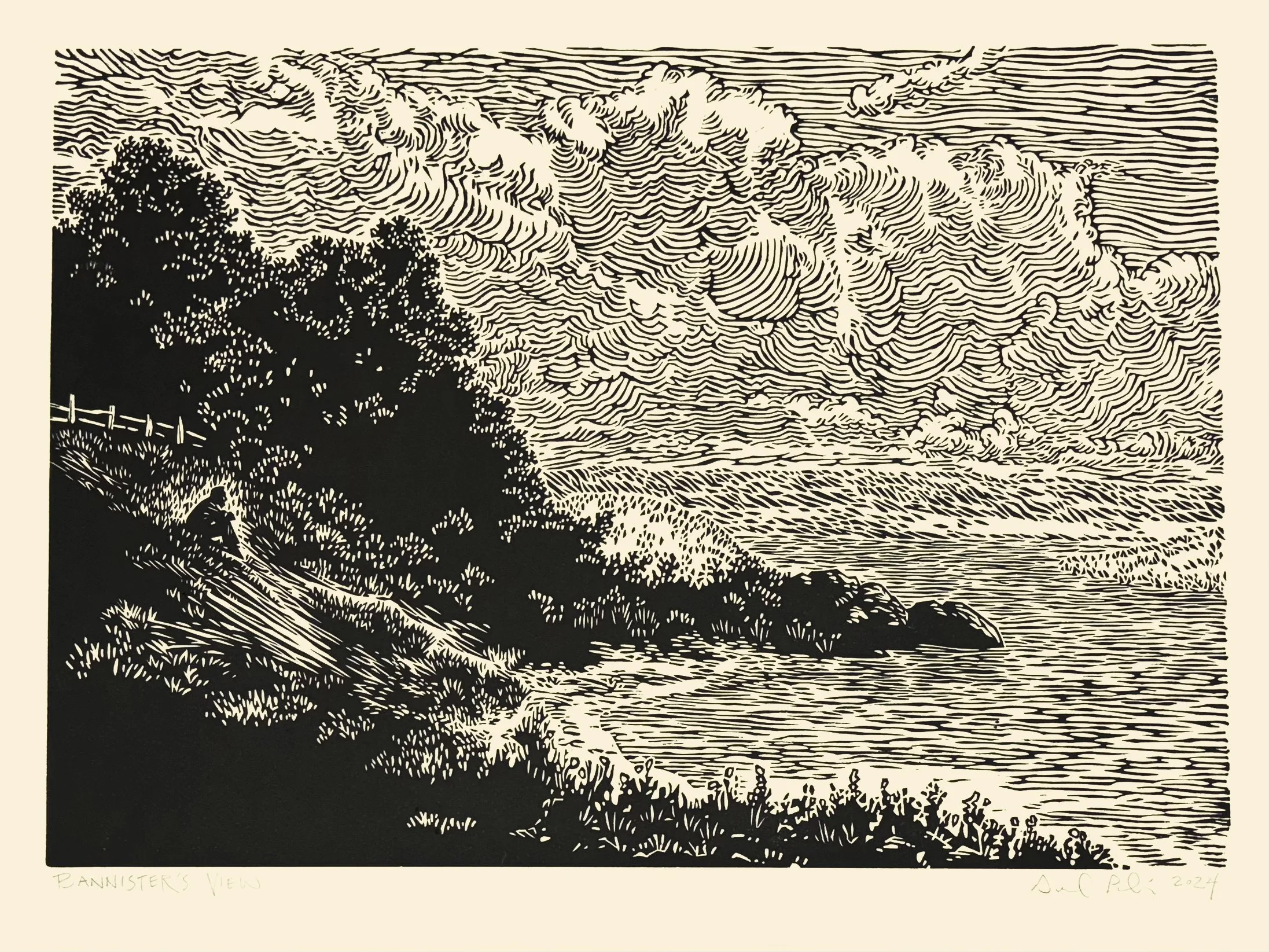 Banister’s View by Darrel Perkins